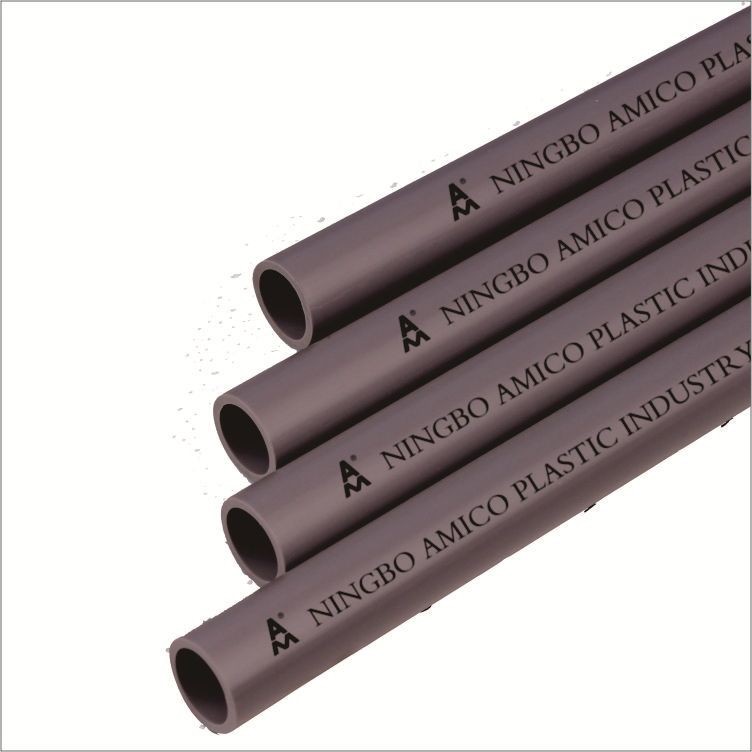
A: Composite pipes have a smooth interior surface, needing less energy for the fluids to circulate. Composites offer excellent resistance against corrosive environments including soils, saltwater, H2S and chemical applications. Composite pipes last longer.
A: Composite pipes are made from a variety of different thermoplastics, such as fibre-reinforced plastics (FRP), glass reinforced plastics (GRP), high-density polyethylene (HDPE), polyvinyl chloride (PVC), and polypropylene (PP).
A: Like most other plastics, PEX will become brittle if exposed to sunlight for too long and may crack under pressure. Typical exposure limit is ~30 days.
A: For all PEX pipe and tubing, the maximum operating temperature is 200 degree F. No PEX should be operated at temperatures above 200 degree F for any length of time. The use of crosslinked polyethylene (PEX) pipe and tubing in high- temperature applications with operating temperatures above 180 degree F may affect the tubing's design life.
A: With ½" tubing a circuit length of 300' is standard, but circuits anywhere from 250' up to 350' are within the range recommended by the Radiant Panel Association. With ⅝" and ¾" tubing, 500' circuits are standard.
A: Run the PEX tubing: PEX needs to be supported a minimum of every 32 inches when running horizontally. If running vertically, it should be supported every 4 to 6 feet. (These supports are critical.) The straps should be plastic or metal that is designed to work for plastic pipe.
A: Aluminum Plastic Composite pipe, also known as PEX-Al-PEX pipe, is a type of plastic pipe consisting of an aluminum core sandwiched between two layers of plastic.
A: Aluminum Plastic Composite pipe is corrosion-resistant, flexible, and easy to install. It is also highly durable and can withstand high temperatures and pressure. Additionally, it is cost-effective and more sustainable than other traditional piping systems.
A: Yes, Aluminum Plastic Composite pipes can be recycled. The plastic and aluminum components can be separated and reused in different applications. This makes them an eco-friendly option for piping systems.
A: Yes, composite pipes can be used for buried irrigation systems. Composite pipes are known for their durability, corrosion resistance, and lightweight nature, making them an ideal choice for underground applications such as irrigation systems. These pipes are designed to handle high pressure and can withstand various weather conditions, making them a reliable option for long-term use in buried irrigation systems.
A: Composite pipes are designed to handle thermal cycling effectively. The combination of materials used in composite pipes, such as fiberglass and resin, provides excellent thermal insulation properties. This insulation prevents heat transfer between the fluid inside the pipe and the surrounding environment, reducing the impact of thermal cycling. Additionally, the flexibility of composite pipes helps to absorb any expansion or contraction due to temperature changes, minimizing the risk of damage or failure. Overall, composite pipes are well-suited to handle thermal cycling and maintain their structural integrity in various temperature conditions.
Q: How do composite pipes perform in high-pressure applications?
A: Composite pipes generally perform well in high-pressure applications. They are designed to be lightweight, yet highly durable and strong, making them suitable for withstanding high-pressure environments. Additionally, composite pipes have excellent corrosion resistance, which further enhances their performance in high-pressure applications. Overall, their combination of strength, durability, and corrosion resistance makes composite pipes a reliable choice for use in high-pressure environments.